Showing posts with label poems. Show all posts

Saturday, September 14, 2024

Where Stories Go To Die

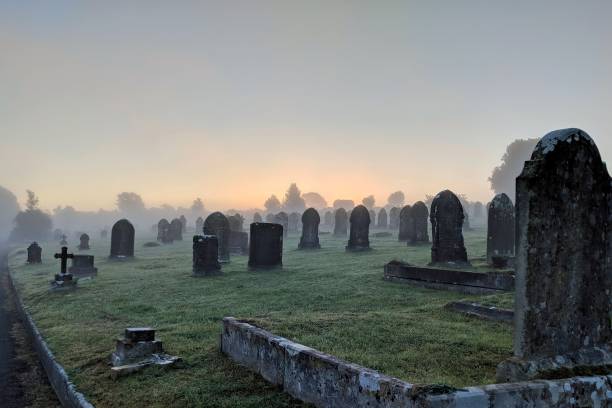
377,200+ Cemetery Stock Photos, Pictures & Royalty-Free ...

Every writer has a file (or a hundred) full of second, third or fiftieth drafts, tales that ran out of gas, amputated poems, stories with a title but no ending, postings never posted, assignments not completed, and great ideas suspended in outer space.

I was recently intrigued by the title of Julia Alvarez’s latest novel, The Cemetery of Untold Stories.  What happens when a story isn’t told, when a narrative is hidden, or a chronicle never shared?  Her protagonist had boxes and boxes of untold stories which she attempted to bury or burn. 

It’s a cemetery for stories, the woman replies.  Con su permiso, how does one bury a story?  If a story is never told, where does it go?

Well, I personally know that they exist pretty much in broken down boxes in the upstairs closet and in the subterranean world of my laptop.  The other evening, I found an entire cache of blogs I wrote but never posted, notebooks of poems scratched down in college and train stations, and cartons of paper-clipped short stories silently waiting for a someday that has yet to come. I hadn’t thought of it as a cemetery. But I stand convicted as charged. Is there still life in those words?

If a story is never told, where does it go? 

Many writers get paralyzed by whether it really matters whether we write this story or that, a journal entry, blog posting, a song, an essay, poem, letter, memoir, or novel.  But if we don’t write it or share it, where does it go?

One does not have to be a poet or author to tell one’s story.  We all have stories, and so many languish untold.  We are packed with stories, not just of incidents and adventures but personal chronicles of God’s faithfulness.  The other day my cousin shared a story about a casual conversation that changed the course of her career.  “I never knew that about you.”

How impoverished we would be if David had not written down his psalms, totally unaware that thousands and thousands of years later, we would still cherish and even memorize his heartfelt words.  JRR Tolkien did not have an idea, character, or story, but a language he invented that no one else spoke or understood.  But he took great joy in writing down his great trilogy of stories, treasured, read and reread now for seventy years.

If a story is never told, where does it go?  If we bury those words as in The Cemetery of Untold Stories, if we hide in the ground the coins we have been given, it is more than just a shame.  (Matthew 25. 25)  Because no story is one dimensional, but multiplies exponentially in the lives of those with whom it has been shared, one generation after another. 

What coins have we been given?

What if no one reads it anyway?  But what if they do?

What if no one cares?  But what if it changes someone’s life?

We can never know how our words impact others.   The poet Malcolm Guite recently recounted an incident when someone was deeply touched by a poem of his.  He chuckled, “The poem meant more than I did.”

Whether others read it or not, we can be faithful.  Because even in the midst of writing it down, God changes us through it.  Every time.

We sit.  We write.  The page is not really blank, but waiting.  The late Irish poet Seamus Heaney once encouraged writers to “listen to the music of what happens.”  And by writing it down, we make room for something new to abide in that space, without which we would be so much poorer, so unaware of the music of the spheres that we do not even know to listen for.

God is the master creator of stories.  He started the world with the grandest story of them all:   In the beginning…..  He is the Word.  He connects our lives in such a way that stories couldn’t help but be invented.  We learn about the world. We learn about Him.  We get a better grasp of who we are.

What really matters is responding to God’s nudges, not to be a famous or mediocre writer.  But a faithful one.

And those are the stories that endure, not to be passed over, or die anonymously in a dusty forgotten sepulcher, but to bear even more fruit beyond our imagination. But not beyond His.

Whatever your hand finds to do,

   do it with your might.

             Ecclesiastes 9. 10

Saturday, January 20, 2024

What Do I Want To Be When I Grow Up?

Looking in the rearview mirror, my husband and I discussed over supper not just what we did in 2023, but “What did God awaken in me this year?” And that went far beyond a litany of our feeble accomplishments to a liturgy of who He is.   

God calls us to much deeper than our accomplishments, but to pray continually, live faithfully, love well, practice grace, and trust Me in this.

God calls us to Himself.

So in 2024, instead of creating an elaborate bucket list of resolutions or goals -- what I want to do -- I am thinking more about what I want to be.  What do I want God to awaken in me this year? Who am I becoming?  I am considering the incremental investments I need to make in my being and relationship with Him for the now and the yet to come.

In his memoir Everything Sad is Untrue, author Daniel Nayeri talks about how his mom navigated their overwhelming hardships as refugees.  "But what you believe about the future will change how you live in the present.  That’s how she did it."

How do we view our future? On what are we staking our lives?  Not what we want to do, but who we want to be when we grow up.

New York Times opinion writer Tish Harrison Warren views this time as an opportunity:  "...the chief value of resolutions is not found in our success or failure at keeping them.  Instead, they help us reflect on what our lives are like, what we would like them to be like, and what practices might bridge the difference.  There is goodness then in the very process of making resolutions.  There is hope in the idea that we can change -- that we can keep growing, learning and trying new things.  This hope of renewal is the point of resolutions for me."

We are not stuck.  We can change.

Becoming calls for continual growth, no matter how old we are, a moveable feast.

Like every year before this, the new year is made up of ordinary days.  What incremental changes can I make today?  In what am I investing this year?  What intentions would you add to your list? 

This is what I am working on:

* Pay attention.  ...to have the mind of Christ. 1 Corinthians 2. 16

*Write something, read something, run something every day.  Whatever your hand finds to do, do it with your might.  Ecclesiastes 9. 10

*Weave kindness in my words. ...that I may show the kindness of God to him.  2 Samuel 9.3

*Don't interrupt.  ...slow to speak. James 1. 19

*Do small things well.  Do not despise the day of small things.  Zechariah 4. 10

*Listen.  Really listen to others and to God.  ...listen to Me. Blessed are those who keep My ways.  Proverbs 8. 32

*Be present.  Therefore encourage one another and built one another up, just as you are doing. 1 Thessalonians 5. 11

*Reinvent.  Reinvest.  Recreate.  Redeem. Do not withhold good from those to whom it is due when it is in your power to do it.  Proverbs 3. 27

*Ask questions.  Lots of questions.  ... Jesus spoke to him first, saying, "What do you think?" Matthew 17. 25

And when we come to the end of the year, how will we find we are different?  Will others recognize that we have been walking with Jesus?  And by what will we be known?  Not by our accomplishments, but that We are His.

And where do we start?  Not with resolutions, but living intentionally, composing something new right where God has placed us today.  

In his beautiful piece The Singing Bowl, poet Malcolm Guite suggests:

Begin the song exactly where you are,

Remain within the world of which you’re made.

Call nothing common in the earth or air,


Accept it all and let it be for good.

Start with the very breath you breathe in now,

This moment’s pulse, this rhythm in your blood


And listen to it, ringing soft and low.

Stay with the music, words will come in time.

Slow down your breathing. Keep it deep and slow.


Become an open singing-bowl, whose chime

Is richness rising out of emptiness,

And timelessness resounding into time.


And when the heart is full of quietness

Begin the song exactly where you are.


Friday, September 10, 2021

And What -- If Anything-- Can Come Out of This?


Yesterday, my husband and I hiked an obscure trail first established ninety years ago but one that I had not hiked before.   As we proceeded down the rock-studded, root-tangled, and eroded pathway, we surmised that perhaps it had not been maintained in that length of time and obviously not often traveled.   

The trail itself would not win any awards, but the surrounding trees and accompanying creek made up for it.  And as we hiked deeper into the thick green forest, we called out “Hey bear!” and clapped our hands to keep from surprising the residents.  You never know what you’ll find around the next bend.

But fear did not restrict us.  And the wonder of God’s creation beckoned us to go farther.

At one point, within a half mile of our turn-around, an enormous tree had recently fallen across the trail, its leaves still green. A chaos of branches and the massive trunk formed an impenetrable road block.  “Time to turn around and call it a day?”  Bill asked, verbalizing the obvious. But then seconds later, more in character, rising to the occasion, pushing aside some large branches and grabbing hold of a steadfast limb, he suggested,  “Let’s see how we can do this.”

Up and over, we both pulled ourselves, not something I would have ever attempted on my own.  As we continued hiking, I realized that simple incidents, such as this, grant us the courage to face the daunting fallen trees on our daily journeys.  “Let’s see how we can do this” sets in place a different mindset, a creative challenge rather than instantaneous defeat.  God's faithfulness and strength are always discovered there.

Alongside the little clearing where we ate lunch, a thigh-deep rushing creek bounded over rocks and flowed down the slope.  Bill fished, catching far more than he ever expected, and releasing them back into the cool waters.  I sat on a large rock, drinking in the sights and reading Wendell Berry poetry that seemed as perfect lyrics set to the symphony around me.  


We began hiking back up the trail towards the trailhead about four miles away, scrambling over the fallen tree which was no longer so daunting.  Bill fished along the way.  And then as the larger creek pulled away from the trail, little rock-hopping tributaries crossed our path.  At one point a stream was the trail.  My shoes became muddy and my socks soaked.  But that didn’t seem to matter any more.

At one dribble of a stream not three feet wide and maybe four inches deep, Bill laughingly dropped his line in the water.  


Within seconds, he was no longer laughing, but delighted.  At the end of his line, as fast as he cast it, a beautiful unexpected brook trout appeared.  Who would have ever thought a fish that size could have come out of such a small patch of water?


And what -- if anything -- can come out of this?  This ordinary day, this mundane task, out of our own unnoticed hard work, this difficulty or impossible situation?  The adversary always claims "It doesn't matter," when indeed it does.  But God says, "Now watch what I do with this."

Faithfulness is sown in places that only seem inconsequential.  Fruitfulness sometimes emerges full grown in the most unlikely places.  Nothing is insignificant in God’s economy. No effort that He cannot use.

In our own little dribble of water, may we be amazed at what God is bringing out of the impossible.  Astonished at what God redeems.  Surprised at what God is up to.  And far beyond what we expect.  We rarely grasp what is below the surface.


They went out and got into the boat,

but that night they caught nothing.

Just as day was breaking,

Jesus stood on the shore;

yet the disciples did not know

      it was Jesus.

Jesus said to them, “Children,

do you have any fish?”

They answered Him, “No.”

He said to them,

“Cast the net on the right side of the boat,

and you will find some.”

So they cast it,

and now they were not able to haul it in,

because of the quantity of fish.


                     John 21. 3-6