Friday, September 20, 2024

All The Prayers We Cannot See


My great grandmother Olivia resided in the wilds of Kentucky in the 1800’s, but led a life not of small significance.  The very little I know about her, I can hold in my hands.  I have her well-worn Bible.  Once, many decades ago, I opened it and noticed some pencil markings in one of the margins. “Praying today for the generations to come.”

And very suddenly, I realized that through all those generations yet unborn, she was also praying for me.  Prayer has no expiration date.

We all live and endure, survive and thrive, on the prayers of those of whom we are unaware.  People we know – or not even acquainted—may be praying for each one of us, and we don’t even realize it.

When we think of what we are accomplishing or overcoming on our own, may we consider the great cloud of witnesses and an immense crowd of other believers, cheering us on, encouraging us from the sidelines, even jumping onto our course to run with us and pray us through. 

In prayer, we do not just look on, or even sympathize with others, but pray them on their journey in the Kingdom.

The apostle Paul begins most of his letters with prayers for others, even those he did not personally know. “We have not ceased to pray for you.” (Colossians 1. 9)

Because when the trajectory of Paul’s own life radically turned, I am convinced someone somewhere was praying for him, a sister perhaps, a friend, or even someone he persecuted.  Paul also became aware that the church body, now spreading like wildfire in the world, was crucially dependent on the life support of the prayers of God’s people.  The church still is.

How differently would we live, if we knew others were praying for us?  Not just in our times of despair and need, but continually lifting us up in prayer, layering God’s strength into our lives through their faithful prayers.  What change would it make if someone told us, “I am praying for you?” 

There are prayers that we cannot see.  But what if we respond verbally to need by replying, “May I pray for you right now?”  Does that change how we pray for others? How does praying in real time impact them on the spot?  Covered by prayers we actually hear.  And know that God hears them too.

We have no idea how our prayers are multiplied exponentially – one prayer spawning others -and how many thousands of individuals are not only profoundly blessed, but able to endure in their time of utter need.  Without our intercession on their behalf, “someone will be impoverished,” states Oswald Chambers in My Utmost for His Highest.  Intercession is “a hidden ministry that brings forth fruit whereby the Father is glorified.”

Prayer also enlarges our vision.  We don’t just see situations or a list of requests.  We see people.  Prayer makes us aware of God’s work around us, His hand over us, and the prayers of the saints holding us tight.  May we ourselves join that chorus of prayer, the encircling music of the spheres, that we would know and trust God more, love people more deeply – and that His glory would saturate all the earth.

We cannot always discern the light from where we stand, but God is already in this place. Praying empowers us to realize His abiding Presence.

Have we considered praying for strangers we pass in the park, for ambulances hurtling down the road, for the grumbling clerk in the store, for musicians on stage, for friends and family who suddenly come to the surface of our thoughts?  Because prayer shifts the tectonic plates of this broken world, not just to repair the jagged edges, but to restore and redeem.  Prayer always alters lives in one way or another.  God creates something new. God changes the course of a life.  Even ours.

All the prayers we cannot see….yet.


Saturday, September 14, 2024

Where Stories Go To Die

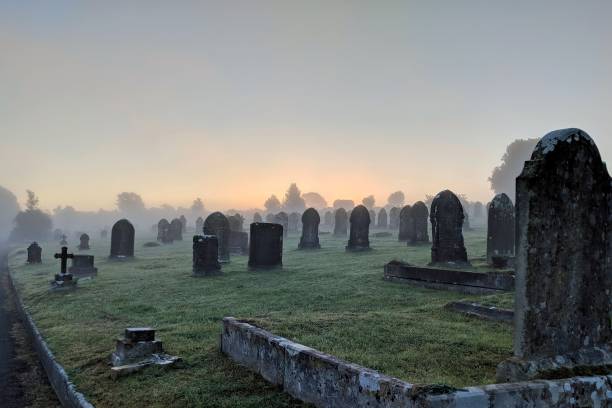
377,200+ Cemetery Stock Photos, Pictures & Royalty-Free ...

Every writer has a file (or a hundred) full of second, third or fiftieth drafts, tales that ran out of gas, amputated poems, stories with a title but no ending, postings never posted, assignments not completed, and great ideas suspended in outer space.

I was recently intrigued by the title of Julia Alvarez’s latest novel, The Cemetery of Untold Stories.  What happens when a story isn’t told, when a narrative is hidden, or a chronicle never shared?  Her protagonist had boxes and boxes of untold stories which she attempted to bury or burn. 

It’s a cemetery for stories, the woman replies.  Con su permiso, how does one bury a story?  If a story is never told, where does it go?

Well, I personally know that they exist pretty much in broken down boxes in the upstairs closet and in the subterranean world of my laptop.  The other evening, I found an entire cache of blogs I wrote but never posted, notebooks of poems scratched down in college and train stations, and cartons of paper-clipped short stories silently waiting for a someday that has yet to come. I hadn’t thought of it as a cemetery. But I stand convicted as charged. Is there still life in those words?

If a story is never told, where does it go? 

Many writers get paralyzed by whether it really matters whether we write this story or that, a journal entry, blog posting, a song, an essay, poem, letter, memoir, or novel.  But if we don’t write it or share it, where does it go?

One does not have to be a poet or author to tell one’s story.  We all have stories, and so many languish untold.  We are packed with stories, not just of incidents and adventures but personal chronicles of God’s faithfulness.  The other day my cousin shared a story about a casual conversation that changed the course of her career.  “I never knew that about you.”

How impoverished we would be if David had not written down his psalms, totally unaware that thousands and thousands of years later, we would still cherish and even memorize his heartfelt words.  JRR Tolkien did not have an idea, character, or story, but a language he invented that no one else spoke or understood.  But he took great joy in writing down his great trilogy of stories, treasured, read and reread now for seventy years.

If a story is never told, where does it go?  If we bury those words as in The Cemetery of Untold Stories, if we hide in the ground the coins we have been given, it is more than just a shame.  (Matthew 25. 25)  Because no story is one dimensional, but multiplies exponentially in the lives of those with whom it has been shared, one generation after another. 

What coins have we been given?

What if no one reads it anyway?  But what if they do?

What if no one cares?  But what if it changes someone’s life?

We can never know how our words impact others.   The poet Malcolm Guite recently recounted an incident when someone was deeply touched by a poem of his.  He chuckled, “The poem meant more than I did.”

Whether others read it or not, we can be faithful.  Because even in the midst of writing it down, God changes us through it.  Every time.

We sit.  We write.  The page is not really blank, but waiting.  The late Irish poet Seamus Heaney once encouraged writers to “listen to the music of what happens.”  And by writing it down, we make room for something new to abide in that space, without which we would be so much poorer, so unaware of the music of the spheres that we do not even know to listen for.

God is the master creator of stories.  He started the world with the grandest story of them all:   In the beginning…..  He is the Word.  He connects our lives in such a way that stories couldn’t help but be invented.  We learn about the world. We learn about Him.  We get a better grasp of who we are.

What really matters is responding to God’s nudges, not to be a famous or mediocre writer.  But a faithful one.

And those are the stories that endure, not to be passed over, or die anonymously in a dusty forgotten sepulcher, but to bear even more fruit beyond our imagination. But not beyond His.

Whatever your hand finds to do,

   do it with your might.

             Ecclesiastes 9. 10

Tuesday, September 3, 2024

Starting with a Squiggly Line

When our growing family took road trips -- back in the olden days before movies, devices, phones, and other convenient distractions-- shoe-horned into our car, our four girls used to play a little game.  I would draw a dot or angle or squiggly line on a small pad of paper, identical for each of them, despite their range of ages.  They would each draw something starting from that initial doodle.  It was amazing how they all saw it differently.  One would sketch a house, another an English garden, a circus tent with an elephant, a baseball game.  And then they would beg to play it over and over.

Every layer of creativity starts with a squiggly line.

In his monumental The Work of Art:  How Something Comes From Nothing (2024), author Adam Moss starts his book with a squiggly line sketched by architect Frank O. Gehry and how from that he envisioned and designed the extraordinary Guggenheim Museum in Bilboa, Spain.

Gehry's initial doodle.


What unfolded from that squiggle:  The completed museum.


Moss interviewed writers, painters, sculptors, artists of all genres, about how they bring about their work from a proverbial squiggly line, a few scribbled words on the back of an envelope, an idea on a subway, the shaping of notes, words and circumstances, the failures and accidents that didn't prove to be mistakes at all.  

The common line through this immense diversity of artists of all kinds is reflected in the title of Moss's book:  the work of art.  Bringing something from nothing requires working at it.

Masterpieces don't just happen.  The people listed in this book are talented, no doubt, but their work didn't just appear fully detailed and shaded in full-color.  They grabbed hold of a tiny little idea and worked with it, many layers over many years.  Took one shape and added something totally irrelevant to it.  Threw away a lot along the way.   Even pulling the discarded out of the wastebasket, dumpster-diving for what was initially overlooked and dismissed.  

They practiced over and over again, worked long hours and sometimes years, until it held together.

Creatives -- and all of us are creatives in one sense or another -- serve the work.  And as Christ-followers, we love serving God and His kingdom through what we do.

What made iconic chef Julia Child so creative was something as simple as, "What if I added cheese to that recipe?" Or oops, a little too much onion.  And it makes me wonder how many of us in this world never bother to pursue that crazy idea of ours.   The missed opportunities, the ignored encounters, and half-sketched thoughts are stuffed in a drawer for later.  The greatest deceit of all is that "what I do doesn't matter anyway." 

Very few writers begin their novels with a full arc already in place, but develop the characters and narrative as it goes along.  In a recent interview, novelist Leif Enger spoke about his recent 2024 book I Cheerfully Refuse.  He started with a simple scene of a house painter eating a cheese sandwich in a warm library.  The story built on itself from there.

Enger paid attention to the squiggly line that appeared seemingly from nowhere. 

The late Alice Munro felt like she was surrounded by squiggly lines -- stories in the making all around her.  "I never have a problem with finding material.  I wait for it to turn up, and it always turns up.  It's dealing with the material I'm inundated with that poses the problem."

What squiggly line has God granted to us today?  What are we doing with it?  We may never realize the masterpiece of goodness that emerges.  But sometimes we do.


Thursday, July 25, 2024

Who I Want To Be When I Grow Up

This week, the 2024 Olympics will launch in Paris.  I love watching the athletes.  But even more, I love hearing their stories.  So many of them remember seeing the Olympics as a child and saying, "I want to be an Olympian."  That desire was awakened in them.

5 lessons from the Olympics for kids | Dayton Children's Hospital

And then they set about to be one. 

The idea didn't make it happen, but instead, years and years of determined practice.  These athletes were focused not on winning, but on persevering.  It was no longer accomplishment that drove them.  It was not the huge championships that changed them, but their daily practice. 

Through sweat and effort and training, they learned:  Do not despise the day of small things.  Zechariah 4. 10   Because there are no insignificant choices, nor ordinary days.  What we choose and how we respond to circumstances alter our trajectory.  Our daily rhythms establish the patterns of our lives.

At the beginning of this year, my husband and I looked in the rear-view mirror and through the front windshield.  Instead of creating an elaborate bucket list of resolutions or goals -- what we want to do – we thought more about who we want to be.  We asked:  What do I want God to awaken in me this year? Who am I becoming?  What incremental investments do I need to make in myself for the now and the yet to come? We are now half-way through 2024.  How have we changed so far? 

What do I want to be when I grow up?   If I ever want things to be different, something has to change.  And that would not hinge on circumstances, but my heart.

In his captivating memoir Everything Sad is Untrue, author Daniel Nayeri talks about how his mom navigated their overwhelming hardships as refugees.  "But what you believe about the future will change how you live in the present.  That’s how she did it."

How do we view our future? Not what we want to do, but who we want to be when we grow up.  Who we want to be in the future is embedded in what we choose to be today. 

It is not I who live, but Christ who lives in me.  Galatians 2. 20 

New York Times opinion writer, author, and Anglican priest Tish Harrison Warren views our choices as opportunities:  "... what practices might bridge the difference…. There is hope in the idea that we can change -- that we can keep growing, learning and trying new things."

We are not stuck.  We can change.

No matter that it is already the middle of the year, no matter how old we are, becoming is a moveable feast laid out whether in a palace or a barren wilderness.  God guides. God provides. God nourishes.  God’s feasts always leave baskets of leftovers.  Becoming has no expiration date.

None too late.  The new year starts every morning and is made up of ordinary days.  What incremental changes can I make today?  In what am I investing in these 24 hours? 

Not what I want to do, but who I want to be, is a long game surpassing far beyond this calendar year.  Think of it not as a finish line but the marathon itself.

And when we come to the end of this year, or the next, will we find we are different?  Will others recognize that we have been walking with Jesus?  By what will we be known?  Not by our accomplishments, but that we are His.

…the God to whom I belong and whom I worship.  Acts 27.23

It is never too late.  Not with resolutions or lists, but living intentionally, composing, practicing, and sowing something new right where God has placed us today, interacting with those He has put on our paths, and seeing how He is enlarging our hearts. Right here. Right now. 

In his beautiful piece The Singing Bowl, poet Malcolm Guite suggests:


Begin the song exactly where you are,

Remain within the world of which you’re made.

Call nothing common in the earth or air,


Accept it all and let it be for good.

Start with the very breath you breathe in now,

This moment’s pulse, this rhythm in your blood


And listen to it, ringing soft and low.

Stay with the music, words will come in time.

Slow down your breathing. Keep it deep and slow.


Become an open singing-bowl, whose chime

Is richness rising out of emptiness,

And timelessness resounding into time.


And when the heart is full of quietness

Begin the song exactly where you are.

Wednesday, June 26, 2024

Blank Spaces


In the course of reading, we often find blank spaces on a page.  These indicate times of transition from one thought to another. Or indicate a passage of time.  Sometimes it just visually breaks up enormous blocks of tiny print, so that one argument or situation does not appear so overwhelming.  The gaps cut a huge thought or development into bite-size bits that we can swallow and digest.

We can take a breather.  And then jump back into the train of thought.

Or in the case of a story, the vacancy is inserted when one scene fades out, and the story is about to move on. A shift in time or place has occurred.  Or the characters have developed. The white space on the page might as well be marked "And then."  The story is not over.  But a new section is about to be revealed.

It is not that nothing going on, but something is happening, perhaps too much for us to comprehend at the moment.  The story progresses and then, and then, and then.  We need to wait a moment, not for the story to catch up, but for us to absorb, think about, and get ready for the next.  

It is a time of preparation.  A time to grow into the narrative which occurs on so many levels.  It is not the end, but the and then.

In life, we sometimes come upon what appears as blank spaces when nothing seems to be progressing, or growing, or happening.  Where is God in those times?  He has not abandoned us.  He is drawing us deeper into relationship with Him.  Profound purposes reside in those spaces.

Over and over in Scripture, God calls us to wait on Him.  Indeed, at least seven words in the Hebrew and Greek combined can be translated as wait.  

But wait is not to be equated as late. Nor does its meaning hang on the uncountable times your mom promised, "Just wait a minute," never intending to do anything.  

It is not that God is ever late or not prepared.  The reality is that time, place, or we ourselves are not yet ready for what unfolds next.  God already knows the chronicle of His faithfulness in our lives. Even what is yet to come.  And then.  And then.  And then.  Steps upon steps.  Layers upon layers.  That which we cannot yet see or grasp, but continually and gloriously revealed in all eternity.

The blank spaces are full of His wonders.  What only appear as gaps notify us not just to stay tuned, but to trust Him even more.  And waiting on Him will get us there.  The story is not over.  The white space on the page is not even an intermission of sorts, but God's grand narrative revealed and redeemed.

If we really knew what was happening, we would not consider it a blank space at all.


Wait for the LORD;

be strong, 

and let your heart take courage;

wait for the LORD!

               Psalm 27.14